
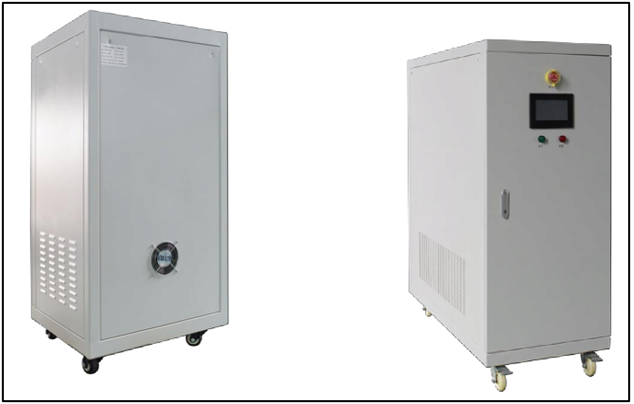
Designing a DC to AC inverter with a power output of 10 kW to 30 kW using IGBT (Insulated Gate Bipolar Transistor) technology is a complex engineering project that requires a deep understanding of power electronics, control systems, and circuit design. Here is a high-level overview of the key steps and considerations involved in designing such an inverter:
-
Specifications and Requirements:
- Define the specific requirements for your inverter, including the input voltage range, output voltage and frequency, efficiency, and any other special features or constraints.
-
Topology Selection:
- Choose the appropriate inverter topology, such as a voltage-source inverter (VSI) or a current-source inverter (CSI), based on your requirements. For most high-power applications, a VSI is common.
-
Components Selection:
- Select high-power IGBT modules that can handle the desired power range. Ensure the selected IGBTs have the necessary voltage and current ratings.
- Choose appropriate capacitors, diodes, and other passive components.
-
DC Link Capacitor:
- Design the DC link capacitor to provide smooth DC voltage and handle high ripple current.
-
Gate Drivers:
- Implement IGBT gate drivers to properly control the switching of IGBTs. Make sure gate driver specifications match the IGBTs.
-
Control System:
- Develop a control system that includes PWM (Pulse Width Modulation) control to generate the AC output voltage and frequency.
- Implement overcurrent protection, overvoltage protection, and other safety features.
-
Cooling System:
- A high-power inverter generates heat, so an efficient cooling system is crucial. Consider using forced air cooling, liquid cooling, or a combination of both.
-
Protection and Safety:
- Implement various protection mechanisms to safeguard the inverter and connected loads. This includes overcurrent protection, short-circuit protection, and overtemperature protection.
-
Isolation:
- Ensure proper isolation between the DC and AC sides of the inverter using isolation transformers or optocouplers.
-
Testing and Simulation:
- Simulate the inverter’s performance using software tools like SPICE or specialized power electronics simulation software.
- Test the physical inverter in a controlled environment to verify its performance and safety.
- Efficiency Optimization:
- Optimize the design for maximum efficiency by selecting high-quality components and minimizing losses in the system.
- EMI/RFI Compliance:
- Ensure that the inverter design complies with electromagnetic interference (EMI) and radio-frequency interference (RFI) standards.
- Compliance and Certification:
- Depending on the application, the inverter may need to pass certain safety and quality certifications.
- Documentation and Manuals:
- Create comprehensive documentation and user manuals for installation, operation, and maintenance.
- Scaling and Customization:
- Consider how to scale the design to different power levels or customize it for specific applications.
It’s important to note that designing a high-power inverter like this is a complex task and often requires a team of electrical engineers and resources. Additionally, you may want to consult with or hire an experienced power electronics engineer to ensure the design meets safety, efficiency, and reliability standards.
CONTACT FOR A FREE QUOTE
Our SCR Diode Testers have been used in the industry for over 40 years.
Our engineers can respond within the hour.
EMAIL: quote@cehco.com
PHONE: (714) 624-4740
CARL E. HOLMES COMPANY
MANUFACTURER OF CUSTOM DESIGNED DC RECTIFIERS UP TO 100 KW, TRANSFORMER RECTIFIER ASSEMBLIES, POWER SUPPLIES, AND SELENIUM RECTIFIERS AND SUPRESSORS
OUR SCR DIODE TESTERS HAVE BEEN USED IN THE INDUSTRY FOR OVER 40 YEARS
RECTIFIER SPECIALIST SINCE 1945
L/C MAGNETICS INC.
MANFACTURER OF DRY TYPE AND OIL FILLED CUSTOM DESIGNED TRANSFORMERS, CURRENT LIMITING REACTORS, AND INDUCTORS FROM 0.1 KVA TO 50 MVA
OFFERING DRY TYPE GENERAL PURPOSE TRANSFORMERS FROM 15 KVA TO 2500 KVA, ALUMINUM WOUND AT AN ATTRACTIVE PRICE
CELEBRATING 35 YEARS IN BUSINESS